

THE SHIELD REPORT
Deep technical EMI shielding intelligence
Issue #2 · Thursday, January 15, 2026 · 6 min read
By POCONS USA — EMI shields + components. Korea → Vietnam → San Diego.
The Signal
💡 One Thing
The 5G rollout created a new class of EMI problem: shielding at 28 GHz and above. At millimeter-wave frequencies, every PCB trace is an antenna, every aperture is a window, and every grounding imperfection is a radiator. The design rules that work at 2.4 GHz fail completely at 28 GHz. Most shielding suppliers haven't caught up.
Regulatory Radar
- •
MIL-STD-461H — Final draft circulating. The Department of Defense is finalizing MIL-STD-461H, replacing 461G (2015). Key changes for shielding engineers: CS101 (conducted susceptibility, power leads) now extends to 10 MHz (previously 150 kHz). RS103 (radiated susceptibility) adds mandatory testing above 18 GHz for systems that operate near 5G infrastructure. If you supply shielding to defense contractors, review your test coverage — the new limits create exposure above 18 GHz that many existing shields weren't designed for.
- •
FCC Part 15 Subpart B — tighter unintentional radiator limits for 6 GHz. The FCC's 2025 Notice of Proposed Rulemaking on 6 GHz unlicensed operation included stricter emission limits for devices operating near the 6 GHz band. Comment period closed in December. If adopted, devices with Wi-Fi 6E/7 will face tighter radiated emission limits at 5.925–7.125 GHz — exactly where many board-level shields have their weakest attenuation due to aperture resonance.
- •
Automotive: UN R10 Revision 6 — broadband immunity up to 6 GHz. The United Nations working group on electromagnetic compatibility (GRE/EMC) is extending the broadband immunity test range for vehicle electronic sub-assemblies from 2 GHz to 6 GHz. This aligns with CISPR 25's proposed extension and reflects the reality that V2X, UWB, and 5G-NR sidelink all operate above 2 GHz. For shield designers: your automotive customer's next RFQ will include 6 GHz requirements even if the current one doesn't.
Design Corner: 5G mmWave Shielding — What Actually Works
The problem: At 28 GHz, the wavelength is 10.7 mm. A shield can aperture of 1 mm — which seems tiny at 2.4 GHz — is λ/10 at 28 GHz. That's electrically large. Radiation leakage through the aperture becomes the dominant EMI path, not the shield wall itself.
What changes at mmWave:
- •
Aperture control becomes absolute. Any gap between the shield can and the PCB ground plane larger than 0.5 mm leaks significant energy at 28 GHz. Solder paste volume uniformity across the shield footprint isn't optional — it's the primary seal.
- •
Shield wall thickness matters less, surface finish matters more. At 28 GHz, the skin depth in copper is ~0.4 µm. A 0.10 mm shield wall is thousands of skin depths thick — more than sufficient. But surface roughness scatters the surface current and reduces effective shielding effectiveness. Polished or flash-plated interior surfaces outperform raw stamped surfaces by 3–8 dB at mmWave.
- •
Two-piece shields have an inherent seam problem. The fence-and-lid joint creates a continuous aperture around the entire shield perimeter. At 2.4 GHz, this is manageable with spring contacts every 2–3 mm. At 28 GHz, the spring contact spacing must be ≤0.5 mm — which is mechanically impractical. Solution: use a one-piece drawn shield can with a single solder seal, or move to a gasket-sealed two-piece design with conductive elastomer compression.
- •
Internal resonance is almost certain. A 15 mm shield can resonates at ~10 GHz (TE₁₀ mode). Higher-order modes activate at 20, 28, and 40 GHz. If your circuit operates at or near these frequencies, the shield can amplify internal noise. Mitigation: add a thin absorber sheet (0.5 mm polyurethane foam loaded with carbonyl iron) to the inside of the shield lid. This damps resonant modes by 10–15 dB without affecting low-frequency attenuation.
Try this: Before specifying a shield for mmWave, build a frequency-domain model of the shield cavity in your EM solver (HFSS, CST). Input the actual aperture dimensions, spring contact spacing, and solder joint geometry. The simulation will show you exactly where the shield fails. We run these models for customers before tooling — it's faster and cheaper than discovering the problem in the EMC chamber.
Metal Watch
| Metal | Price | Change | Outlook |
|---|---|---|---|
| Copper (Cu) | $12,150/t | ↑ 1.1% | AI infrastructure demand building |
| Tin (Sn) | $47,800/t | ↓ 0.5% | Post-holiday correction, stable fundamentals |
| Nickel (Ni) | $17,400/t | → flat | Indonesia export tax discussion begins |
Shield lead times: 4–6 weeks (standard) · 2–3 weeks (expedite) · Custom tooling: 2–3 weeks
Field Notes
From the bench. Names changed, lessons real.
Problem: A medical device company was developing a surgical robot controller — a tabletop unit with an ARM processor, motor drivers, and a Wi-Fi 6 radio for telemetry. The design passed IEC 60601-1-2 at 80 MHz–2.7 GHz but failed radiated immunity at 5.2 GHz. The Wi-Fi receiver lost synchronization when exposed to the immunity test field.
Root cause: The shield can over the Wi-Fi module had a 2 mm cable exit aperture for the antenna feed. At 5.2 GHz (λ = 57.7 mm), the 2 mm aperture is λ/29 — borderline. But the aperture wasn't the main problem. The shield can's solder joint had a 0.8 mm gap on one side due to solder paste stencil misalignment during assembly. That gap, combined with the cable aperture, created a slot antenna that coupled the immunity test field directly into the Wi-Fi module's RF front end.
Approach: Two changes. First, redesigned the solder paste stencil to ensure 100% pad coverage on the shield footprint — added 0.05 mm overprint on all shield pads. Second, replaced the open cable exit with a waveguide tunnel: the shield wall was extended 4 mm inward around the cable exit, creating a 2 mm × 4 mm tunnel. At 5.2 GHz, this tunnel is below cutoff and adds ~18 dB of attenuation.
Result: Passed IEC 60601-1-2 radiated immunity at 5.2 GHz with 8 dB margin. Wi-Fi throughput during immunity testing was unchanged. Total shield modification cost: $0.08/unit (added material for the tunnel). Solder paste stencil revision: $200 one-time.
Lesson: The failure wasn't a shield design problem — it was a manufacturing process problem. The 0.8 mm solder gap turned a compliant shield into a non-compliant one. At GHz frequencies, your shield is only as good as your worst solder joint.
What This Means
If you're designing anything that operates above 5 GHz and uses board-level shielding, the rules change fundamentally. Aperture dimensions that are invisible at 2.4 GHz become dominant leakage paths. Get your shield geometry modeled before layout freeze — not after your first EMC test failure.
One Thing
💡 One Thing
"At 28 GHz, the skin depth in copper is 0.4 microns. Your shield wall is thousands of times thicker than it needs to be. The weak point isn't the wall — it's every gap, seam, and aperture around it."
From Our Factory in Suwon, Korea
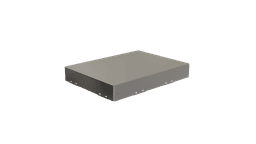
EMI Shields
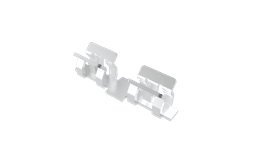
Shield Clips
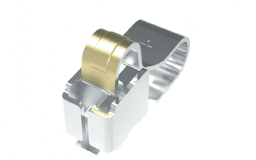
Spring Contacts

SMD PAN NUTs
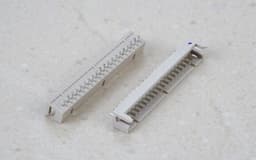
Connectors
poconsusa.com/newsletter — full archive
POCONS USA · 7750 Dagget St #208, San Diego, CA 92111